Knee Pain Treatment & Physiotherapy Coventry, Warwickshire
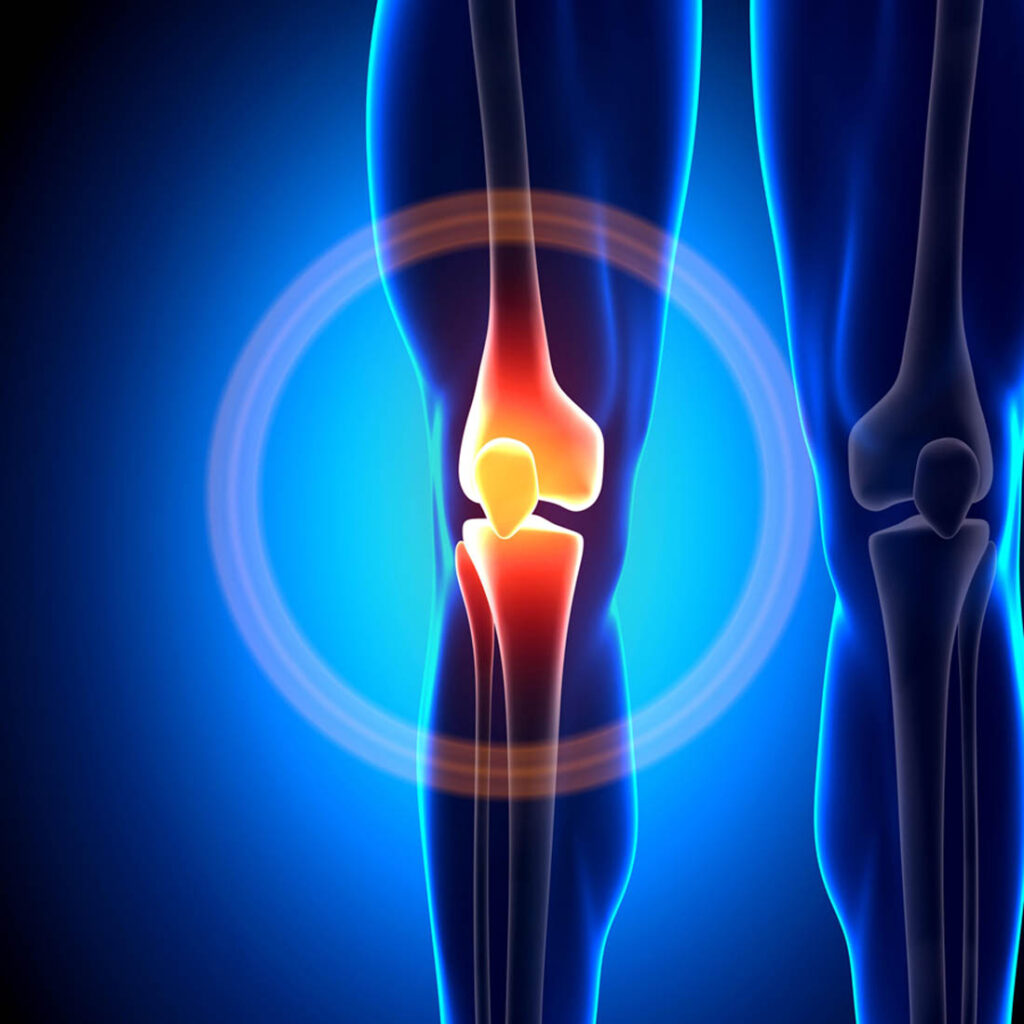
The knee is a joint which has three parts. The thigh bone (femur) meets the large shin bone (tibia) forming the main knee joint. This joint has an inner (medial) and an outer (lateral) compartment. The kneecap (patella) joins the femur to form a third joint, called the patellofemoral joint.
The knee joint is surrounded by a joint capsule with ligaments strapping the inside and outside of the joint (collateral ligaments) as well as crossing within the joint (curciate ligaments). These ligaments provide stability and strength to the knee joint.
The meniscus is a thickened cartilage pad between the two joints formed by the femur and tibia. The meniscus acts as a smooth surface for the joint to move on. The knee joint is surrounded by fluid-filled sacs called bursae, which serve as gliding surfaces that reduce friction of the tendons. Below the kneecap, there is a large tendon (patellar tendon) which attaches to the front of the tibia bone. There are large blood vessels passing through the area behind the knee (referred to as the popliteal space). The large muscles of the thigh move the knee. In the front of the thigh, the quadriceps muscles extend the knee joint. In the back of the thigh, the hamstring muscles flex the knee. The knee also rotates slightly under guidance of specific muscles of the thigh.
The knee functions to allow movement of the leg and is critical to normal walking. The knee flexes normally to a maximum of 120 degrees and extends to 0 degrees. The bursae, or fluid-filled sacs, serve as gliding surfaces for the tendons to reduce the force of friction as these tendons move. The knee is a weight-bearing joint. Each meniscus serves to evenly load the surface during weight-bearing and also aids in disbursing joint fluid for joint lubrication.
Knee Pain there are three compartments in the knee joint
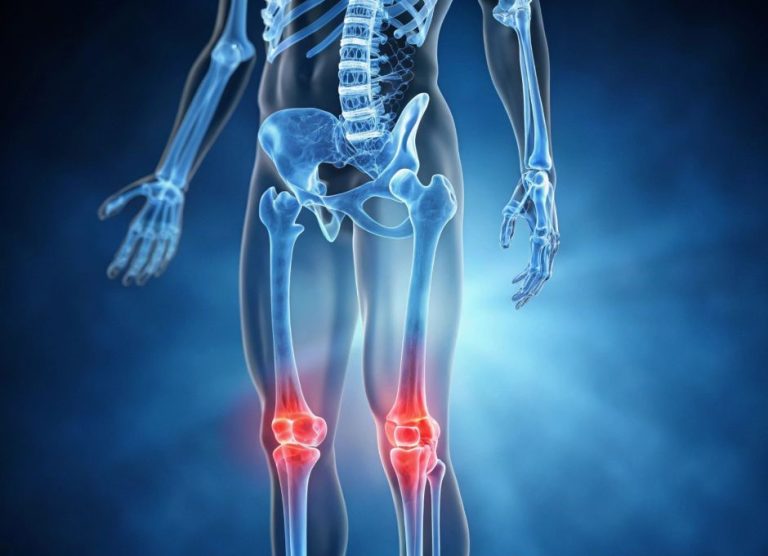
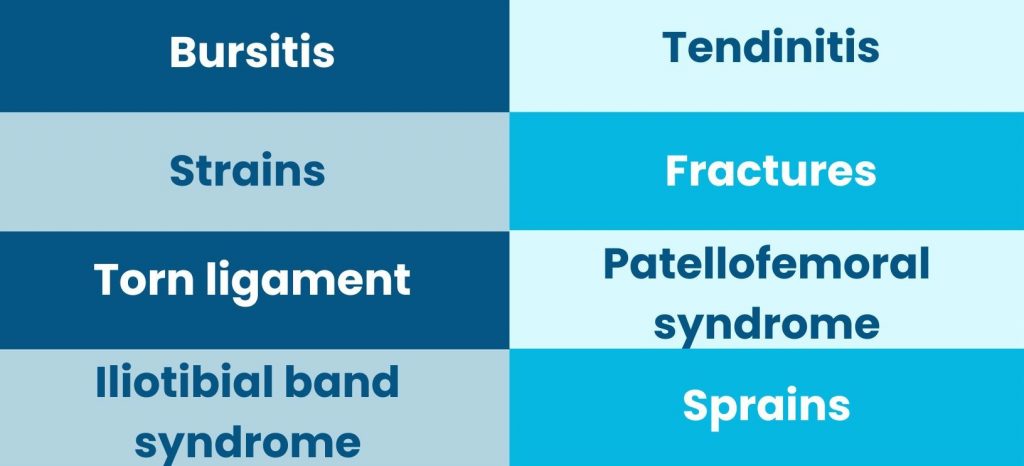
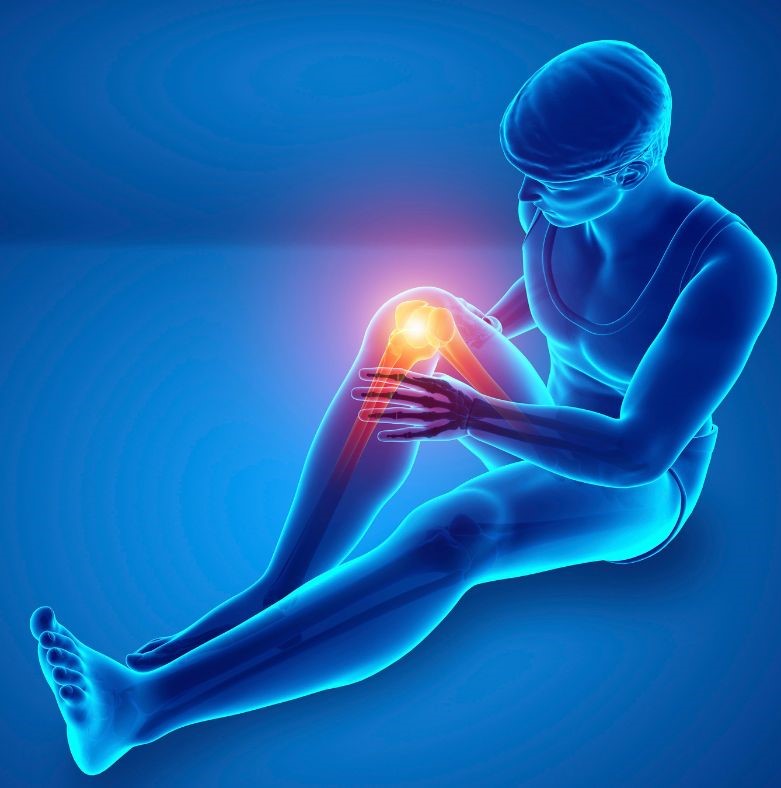
Knee pain can be caused by injury, degeneration, arthritis, infrequently infection, and rarely bone tumors. The knee joint is the most commonly involved joint in rheumatic diseases, immune diseases that affect various tissues of the body including the joints to cause arthritis.
Ligaments within the knee (cruciate ligaments) and on the inner and outer sides of the knee (collateral ligaments) stabilize the joint.
Surgical repair of ligament injury can involve suturing, grafting, and synthetic graft repair. Routine x-rays do not reveal meniscus tears, but can be used to exclude other problems of the bones and other tissues.
Injury and Symptoms.
Injury can affect any of the ligaments, bursae, or tendons surrounding the knee joint. Injury can also affect the ligaments, cartilage, menisci (plural for meniscus), and bones forming the joint. The design of the knee joint and that it is an active weight-bearing joint are factors in making the knee one of the most injured joints of the human body.(see cold laser section under conditions treated).
Ligament Injury and Treatment.
Trauma can cause a severe injury to the ligaments on the inner portion of the knee), the outer (lateral) portion of the knee (lateral collateral ligament), or within the knee (cruciate ligaments). Injuries to these areas are noticed as immediate knee pain, but are difficult to localize. A collateral ligament injury is felt on the inner or outer portion of the knee. A collateral ligament injury is tenderness over and around the area of the ligament involved. A cruciate ligament injury is felt within the knee. It is sometimes noticed with a "popping" sensation with the initial trauma. A ligament injury to the knee is painful and may be swollen the knee pain is usually worsened by bending the knee, putting weight on the knee, or even walking. The severity of the injury can vary from minor stretching or tearing of the ligament, such as a sprain to severe and complete tear of the ligament the knee can have more than one area injured in a single traumatic event.
Ligament injuries are initially treated with ice packs and immobilization, with rest and elevation. It is generally initially recommended to avoid bearing weight on the injured joint, and crutches may be required for walking. Some patients are placed in splints or braces to immobilize the joint to decrease pain and promote healing. Arthroscopic or open surgery may be necessary to repair severe injuries. (See our cold laser section. Conditions treated)
Meniscus Tears and Treatment.
The meniscus can be torn with the shearing forces of rotation that are applied to the knee during sharp, rapid motions. This is especially common in sports such as football and other rapid motion activites. There is a higher incidence with aging and degeneration of the underlying cartilage. Several tears can be present in an individual meniscus. A meniscal tear may have a rapid onset of a popping sensation with a certain activity or movement of the knee. Occasionally, it is associated with swelling in the knee It is also associated with locking or an unstable sensation in the knee joint. X-rays while they do not reveal a meniscal tear can be used to exclude other problems of the knee. The meniscal tear can be diagnosed in one of three ways: arthroscopy, arthrography, or an MRI. Arthroscopy is a surgical technique by which a small diameter video camera is inserted through tiny incisions on the sides of the knee for the purposes of examining and repairing internal knee joint problems. Micro instruments can be used during arthroscopy to repair the torn meniscus.(See cold laser section under Conditions treated)
Arthrography is a radiology technique whereby a contrast liquid is directly injected into the knee joint and internal structures of the knee joint thereby become visible on x-ray film. An MRI scan is another radiology technique whereby magnetic fields and a computer combine to produce two- or three-dimensional images of the internal structures of the body. It does not use x-rays, and can give accurate information about the internal structures of the knee when considering a surgical intervention. Meniscal tears are often visible using an MRI scanner. MRI scans have largely replaced arthrography in diagnosing meniscal tears of the knee. Meniscal tears are generally repaired arthroscopically. (See cold laser therapy section under Conditions treated).
Tendinitis and Treatment.
Knee Pain and tendonitis of the knee occurs in the front of the knee below the kneecap at the patellar tendon (patellar tendinitis) or in the back of the knee at the popliteal tendon (popliteal tendinitis). Tendinitis is an inflammation of the tendon, which often occurs by a strain or impacted sport such as jumping. Patellar tendinitis, also has the name "jumper's knee." Tendinitis is diagnosed based on the presence of pain and tenderness localized to the tendon. It is treated with ice packs, and cold laser therapy {see our cold laser section} cortisone injections, which can be given for tendinitis elsewhere, are generally avoided in patellar tendinitis because there are reports of risk of tendon rupture as a result of corticosteroids in this area. In severe cases, surgery can be required. A rupture of the tendon below or above the kneecap can occur. This may lead to bleeding within the knee joint and severe pain with knee movement. Surgery of the ruptured tendon is often necessary. (See cold laser therapy section under Conditions treated).
Diseases or Conditions.
Diseases or conditions that involve the knee joint, the soft tissues and bones surrounding the knee, or the nerves that supply sensation to the knee area can result in knee pain. In fact, the knee joint is the most commonly affected joint in rheumatic diseases, immune diseases that involve various tissues of the body including the joints to cause arthritis.
Arthritis is inflammation within a joint. The causes of knee joint inflammation range from types of arthritis such as osteoarthritis, which is a degeneration, or wear and tear, of the cartilage of the knee, to inflammatory types of arthritis (such as rheumatoid arthritis or gout). Treatment of the arthritis is directed according to the nature of the specific type with cold laser being one of the most effective types of treatment in managing the inflammation.
Baker cyst is another common cause of pain at the back of the knee resulting from swelling of the knee joint from arthritis leading to a localized collection of fluid accumulating in a cyst behind the knee.
Tumors and Infections of the bone or joint can rarely be a serious cause of knee pain and have associated signs of infection including fever, extreme heat, warmth of the joint, chills of the body, and may be associated with puncture wounds in the area around the knee.
Pellegrini-Stieda syndrome is a calcification of the collateral ligament on the inside of the knee joint. With this condition, the knee can become inflamed and can be treated conservatively with ice packs, immobilization, and rest. Infrequently, it requires a local injection of corticosteroids.
Chondromalacia refers to a softening of the cartilage under the kneecap (patella). It is a common cause of deep knee pain and stiffness in young women and can be associated with pain and stiffness after prolonged sitting or climbing stairs. Treatment with anti-inflammatory medications, ice packs and rest may help. (See our Cold Laser Therapy Section under Inflammatory conditions.). Bursitis of the knee occurs on the inside of the knee (anserine bursitis) and the front of the kneecap (patellar bursitis, or commonly known as "housemaid's knee"). Bursitis is generally treated with ice packs, immobilization, and anti-inflammatory medications or Cold laser therapy. (See our Cold Laser Therapy Section under Inflammatory conditions.).
Opening Hours
- Mon 8.00am - 7.30pm
- Tue 8.00am - 7.30pm
- Wed 8.00am - 7.30pm
- Thu 8.00am - 7.30pm
- Fri 8.00am - 6.00pm
- Sat 9.00am - 1.00pm
Latest News & Articles
Severe Neck Pain Causes Warwickshire
Due to an inherent weakness in the area, neck pain can be one of the...
2 September 2010 | Read Article »
Cure Upper Back Pain Warwickshire
This latest news post discusses the treatments the Central Chiropractic Clinic provide to help cure...
18 August 2010 | Read Article »